
How to Choose the Right Laundry Room Remodel Contractor Near Me: Questions to Ask and Red Flags to Avoid
If you’ve typed “laundry room remodel contractors near me” into Google and come back with a wall of names, reviews, and contractor websites that all look alike, you’re not alone. Finding the right laundry room remodel contractors near me, or rather, near you, is harder than it should be.
Unlike kitchens and bathrooms, laundry rooms rarely get the spotlight. There’s less content, fewer portfolio examples, and almost no practical guidance on what to ask before you hand someone a deposit check. That’s true whether you’re searching in Buffalo’s North Park neighborhood or anywhere else in Western New York.
At TBrothers Renovations, we’ve worked with Buffalo homeowners across enough projects to recognize where the hiring process breaks down. This guide gives you a practical framework to search smarter, compare bids honestly, verify credentials, and spot red flags before they cost you money. By the time you finish reading, you’ll know what questions to ask, what to confirm on your own, and what to walk away from.
What a laundry room remodel actually covers
Most homeowners assume a laundry room remodel means swapping appliances and slapping on a fresh coat of paint. The reality is that even a mid-range renovation touches plumbing, electrical, ventilation, cabinetry, and flooring, and all of those decisions interact with each other. Getting the layout wrong upfront makes every downstream decision harder.
Layout and storage configurations worth considering
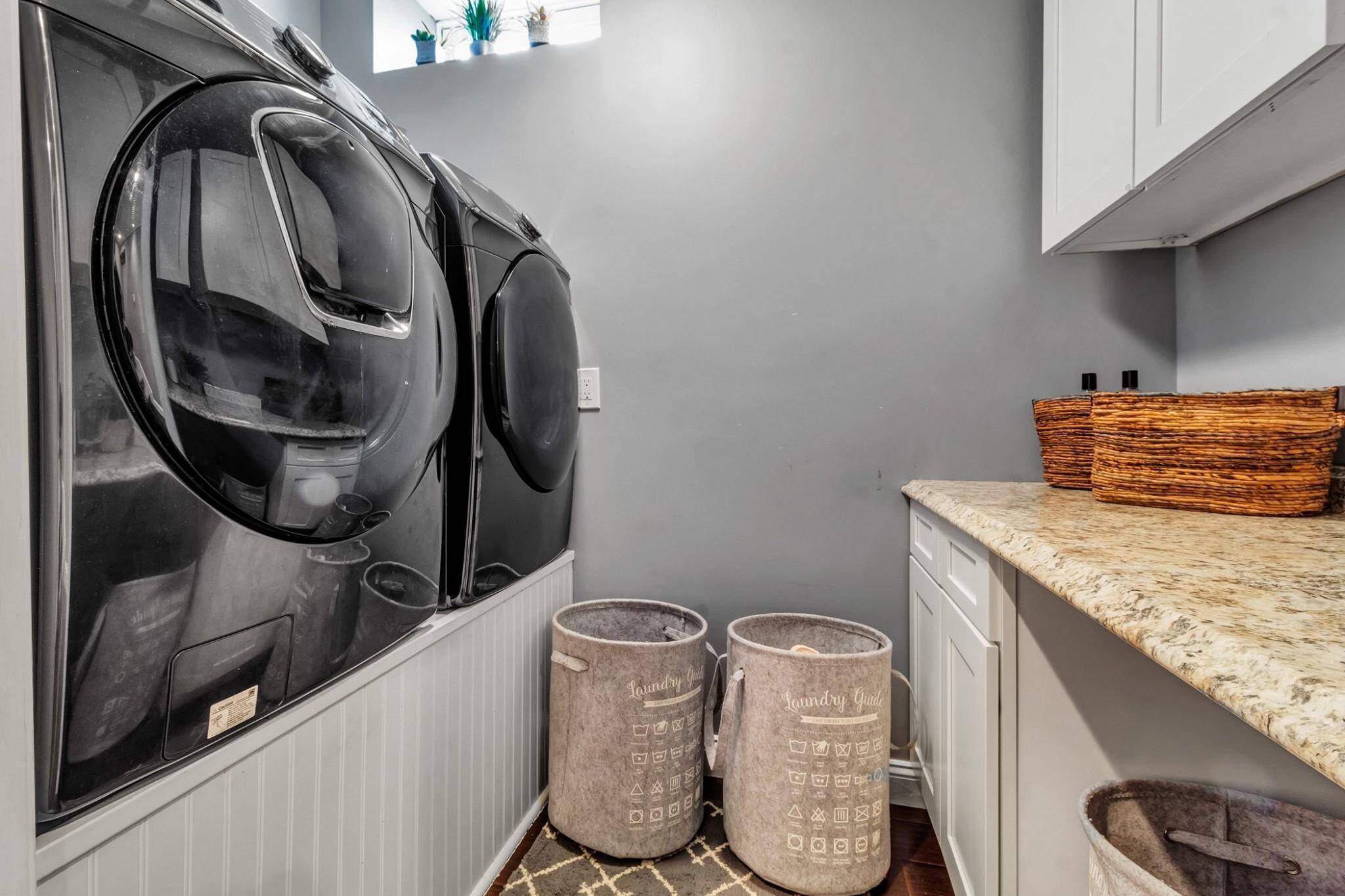
Your layout choice drives everything else in the project. Side-by-side machines give you a folding surface above the units; this configuration works well when your room is at least five feet wide. Stacked appliances free up floor space in tighter rooms under roughly 35 square feet, making room for a narrow folding counter, a utility sink, or additional storage. L-shaped and galley layouts work well in medium-sized dedicated rooms, creating separate wet and dry work zones without requiring the footprint of a full U-shaped design.
Most homeowners are surprised by how much storage a thoughtfully designed laundry room can hold. Vertical cabinetry, pull-out hamper towers, and a dedicated folding counter can transform a cramped utility space into one of the most functional rooms in the house. Storage planning should happen before any cabinetry is ordered, not after demo begins.
Ventilation, hookups, and the details contractors often skip
New York State’s residential code requires dryer exhaust to terminate outdoors through a smooth metal duct, with a maximum standard length of 35 feet from the transition connector to the exterior termination point. It cannot discharge into a wall cavity, attic, or any other interior space.
Any qualified contractor handling laundry remodeling services should walk through every utility detail during the estimate phase: dedicated 240V circuits for electric dryers, gas line considerations, washer standpipes, and hot and cold supply shutoffs.
Poor ventilation planning is a known risk and a frequent source of callbacks after a project wraps. If a contractor doesn’t raise dryer exhaust routing during the estimate, that’s a sign they’re not thinking through the full scope of work. Push for specifics before any contract is signed.
Realistic costs and timelines for laundry room renovation
Going into contractor conversations without a baseline number puts you at a disadvantage. Here’s what to expect from each level of project scope in 2026.
What you’ll actually pay by project scope
Laundry room remodeling cost varies widely depending on scope. Here’s a breakdown of typical 2026 price ranges:
- Minor cosmetic refresh (paint, lighting, new shelving): $1,500 to $5,000
- Small dedicated laundry room (stock cabinets, basic plumbing updates): $5,000 to $10,000
- Standard mid-range remodel (50 to 100 sq. ft., cabinetry, countertops, flooring, utility sink): $6,000 to $17,000, averaging around $11,000
- Full remodel with layout changes (semi-custom cabinetry, utility upgrades): $11,000 to $24,000
- Luxury or major renovation (relocated plumbing, premium finishes): $15,000 to $42,000 or more
A useful planning benchmark is $100 to $200 per square foot for mid-range work, though the broader published range runs from $50 to $350 depending on finishes and scope. The single biggest cost-saving decision you can make is keeping the washer and dryer in their existing locations. Relocating hookups, moving a drain, or upgrading the electrical panel to accommodate a new 240V circuit can add thousands to the budget. Appliances, permits, and utility relocation are also frequently excluded from initial estimates, so make sure every bid spells out exactly what’s in and what isn’t.
How long each level of remodel takes
A small cosmetic update with no plumbing changes takes one to three days of active work and about one week total. Mid-range remodels run one to two weeks on-site, with three to eight weeks of total calendar time once material lead times are factored in. A full gut renovation requires three to six weeks of construction and eight to fourteen weeks from signed contract to completion when permits, inspections, and material procurement are included.
The biggest schedule risks are custom cabinet lead times (six to ten weeks for custom; three to five weeks for semi-custom), permit approvals, and hidden water damage discovered during demo. A credible contractor will tell you upfront which milestones are on the critical path and flag the scenarios most likely to cause delays. If a contractor promises a tight timeline without qualifying those risks, treat it as a warning sign rather than a selling point.
Finding laundry room remodel contractors near me: where to look
Searching for local remodeling contractors works best when you use platforms in a specific order rather than treating every site the same way. Each platform has a different strength, and using them together gives you a more complete picture than any single source can.
The platforms that actually surface quality local remodelers
Start with Google Business Profile. It surfaces local map results, photos, and review volume, and it lets you see how contractors respond to complaints. A contractor who responds to a negative review with accountability tells you more about their character than ten glowing five-star ratings. From there, check Houzz for portfolio depth, it’s a strong platform for evaluating completed laundry remodeling work through photos of real projects. For neighborhood-level input, Nextdoor is worth a look because recommendations there come from homeowners who recently hired in the same area. Use Yelp and Angi as cross-checks to verify reliability and pricing consistency across a broader pool of reviews.
Review sites are tools to support your vetting process, not to replace it. License checks, insurance verification, and references still have to happen independently, regardless of how many positive reviews a contractor has accumulated.
What to look for before you even make a call
Review specificity matters more than review volume. A review that describes a contractor handling a mid-project plumbing issue without adding to the bill is worth more than a generic five-star rating with no detail. Look specifically for photos of completed laundry room projects, not just kitchens or bathrooms. Check when reviews were posted and whether the volume is consistent over time or heavily clustered around a single short window. Thin or bunched review histories are worth noting before you schedule an estimate.
How to vet laundry room remodel contractors near me
The estimate appointment is your best opportunity to separate serious contractors from those who will cause problems later. Come prepared with specific questions and know what answers should concern you.
Credentials and permits you should always verify
Within the City of Buffalo, contractors performing residential home-improvement work need a City of Buffalo contractor license through the Department of Permit and Inspection Services, along with proof of general liability insurance and workers’ compensation coverage. Specialty trades like plumbing and electrical require separate licensing. Ask for license numbers and verify them independently, don’t take a contractor’s word for it.
Laundry room work that involves new circuits, relocated drains, or gas lines typically requires building, plumbing, electrical, and mechanical permits. A contractor who tells you permits aren’t necessary for that scope of work is a significant red flag. Always ask specifically who pulls the permits and who schedules inspections. That responsibility should fall on the contractor, not on you.
On upfront payments: consumer protection agencies consistently flag large deposits as a warning sign. A reasonable deposit tied to a clear payment schedule is normal; payments should be milestone-based rather than front-loaded. If a contractor’s deposit requirement feels disproportionate before any work has started, that’s worth pushing back on before signing anything.
Questions that separate serious contractors from those you should avoid
During every estimate, ask these questions and require written answers for anything that matters:
- What is included line by line, and what is explicitly excluded?
- Who handles plumbing and electrical: employees or subcontractors, and are they licensed and insured?
- Can you provide a written schedule with milestone dates for demo, rough-ins, inspections, cabinetry, and closeout?
- What triggers a change order, and how is it documented before work proceeds?
- What does your workmanship warranty cover, for how long, and where does it appear in the contract?
Walk away from any contractor who demands a disproportionate upfront payment, won’t provide a written contract before starting, uses vague scope descriptions with large unexplained allowances, or can’t provide references from recent laundry room or utility room projects. Those aren’t negotiating tactics, they’re patterns that show up consistently in homeowner complaints to consumer protection agencies.
Comparing bids without getting burned
Price is the easiest number to focus on and the worst one to use as your primary comparison point. A lower total can simply mean a contractor left out work that another bid includes. The only way to compare bids fairly is to read them at the line-item level.
Itemized bids vs. lump sum totals
Require every bid to separate labor, materials, permits, disposal, allowances, and contingency. When comparing three bids side by side, match line items, not totals. A $14,000 bid can be more complete than a $12,000 bid if it includes permit fees, appliance installation, and a utility sink that the cheaper bid omitted entirely. Identify what each bid includes and excludes before drawing any conclusions about which one is actually the better deal.
Pay close attention to allowances. An allowance is a placeholder for an item not yet selected, like tile, cabinetry, or fixtures. If your actual selection costs more than the allowance, you pay the difference, often with a markup applied on top. Ask for realistic product examples that fit the stated allowance amount before you sign anything.
Warranty and change order terms that matter most
Any warranty that isn’t written into the contract before signing is not a warranty. Ask every contractor to show you exactly where the workmanship warranty, change order procedure, and payment schedule appear in their contract. Payment schedules tied to completed milestones, not calendar dates, protect you if work stalls. Warranty terms should specify duration, what’s covered, what’s excluded, and who handles claims if a subcontractor’s work is the source of the problem.
Change orders should describe the added or removed work, the cost breakdown, the schedule impact, and the revised contract total, all in writing before the work proceeds. If a contractor pushes back on that requirement, that tells you everything you need to know about how mid-project disputes will go.
Why Buffalo homeowners choose TBrothers Renovations
Every point covered in this article connects directly to how TBrothers Renovations runs projects. Our process was built to eliminate the uncertainty that makes hiring a laundry room remodeler stressful for Buffalo homeowners.
A structured process that removes the guesswork
TBrothers approaches every renovation through a four-phase process: planning, design, protection, and build. Before demo begins, we sit down with you to understand how you use the space, what your storage priorities are, and what the project needs to accomplish within your budget. For homeowners who want design support, we partner with Signature Design Studio to develop cabinetry selections, finish choices, and storage configurations that fit the space. Everything gets documented before a single wall comes down, so there are no surprises mid-project.
What working with TBrothers looks like start to finish
We use dust-reduction tools throughout active construction to protect the rest of your home, this matters especially in older Buffalo homes where laundry rooms share walls with finished living spaces. Our team handles permits, schedules inspections, and keeps you informed at each milestone with progress updates so you always know where the project stands. To see recent laundry room and utility room work, view our portfolio, or reach out directly to schedule a consultation and get an accurate estimate before you commit to anything.
Putting it all together
Hiring the right laundry room remodel contractors near me, or near you, wherever you are in the Buffalo area, comes down to doing the homework upfront. Know what a full renovation actually includes and set a realistic budget using the cost ranges in this guide. From there: search the right platforms in the right order, verify credentials independently, and ask specific questions during every estimate.
Then compare bids line by line rather than by total price. That sequence catches most of the problems homeowners run into after it’s too late to course-correct.
For Buffalo homeowners who want laundry remodeling services that meet every standard covered here, TBrothers Renovations offers the structured process, design partnership, and local track record to get the job done right the first time. Get in touch with our team to request a consultation or view our home renovations portfolio and see what a well-planned laundry room renovation looks like from start to finish.