
7 Best Flooring Options for a Kitchen Remodel: Pros, Cons & How to Choose
Choosing the best flooring for a kitchen remodel isn’t as simple as naming one material. The right floor for your kitchen depends on your home, your style, your budget, how much maintenance you’re comfortable with, and how your family actually uses the space.
A busy family kitchen may call for something highly durable and water resistant. An open-concept kitchen may benefit from continuing the same hardwood used throughout the rest of the home. Another homeowner may care most about natural materials, easy maintenance, warmth underfoot, or keeping the project within a certain budget.
That’s why there is no single winner.
Below, we’ll compare 7 of the best flooring options for a kitchen remodel, including the advantages, drawbacks, costs, and situations where each one makes the most sense.
1. Porcelain Tile: Durable and Highly Water Resistant
Porcelain tile is a strong kitchen flooring option when durability and water resistance are high priorities.
According to the Tile Council of North America, porcelain tile has a water absorption rate of 0.5% or less, making it particularly well suited to areas where moisture is a consideration.
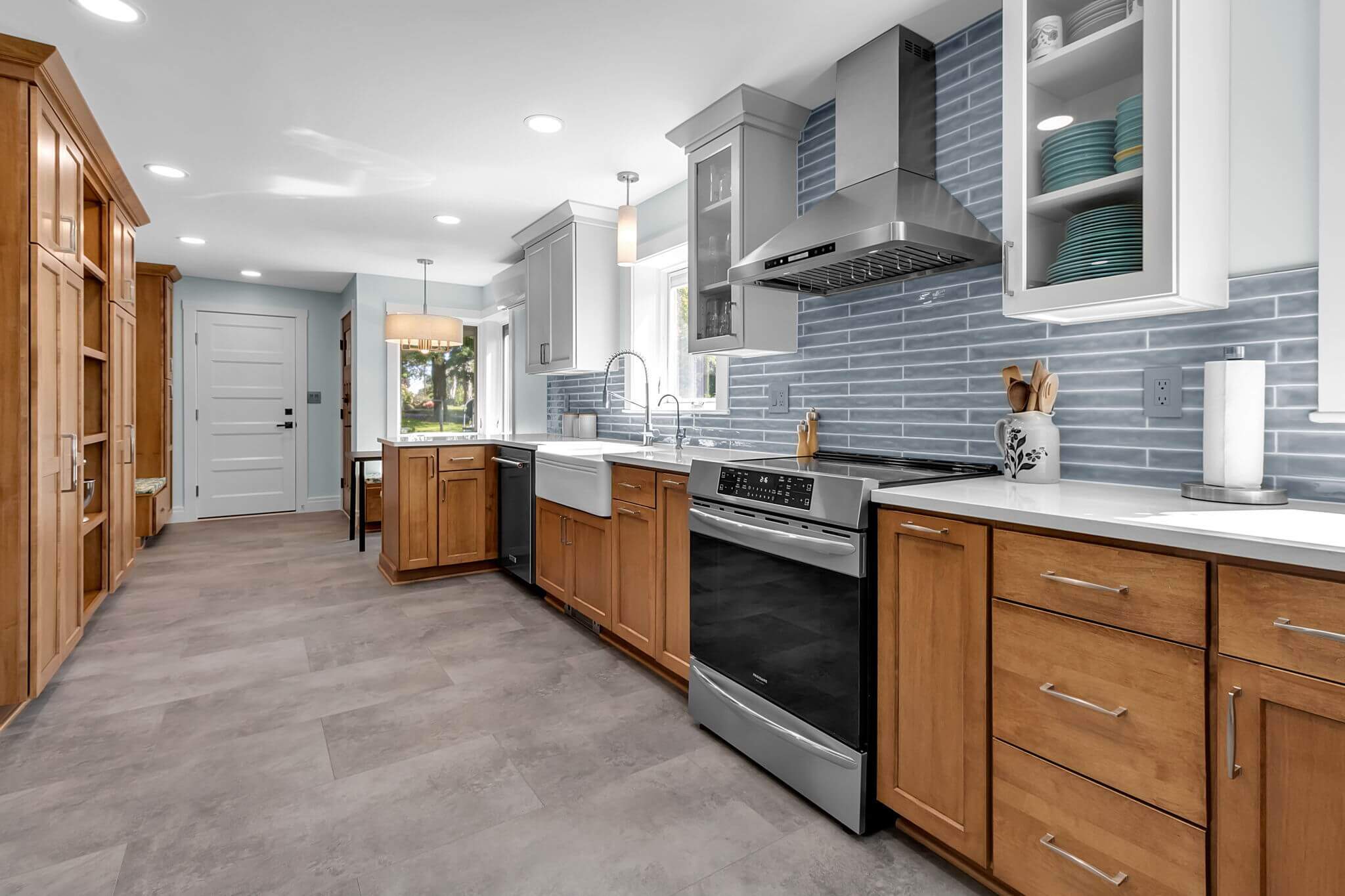
It can handle heavy foot traffic, spills, stains, and everyday wear while offering an enormous range of design possibilities. Porcelain can resemble natural stone, wood, concrete, or traditional tile, making it suitable for many different kitchen styles.
Porcelain may be a good fit if you want:
- Excellent water resistance
- High durability
- Easy everyday cleaning
- Lots of design choices
- A floor with a long potential lifespan
Things to consider: Tile is hard underfoot and can feel cold compared with wood or vinyl. Grout also requires some maintenance, and proper installation is especially important.
Typical lifespan: 25–30+ years
Typical installed cost: Approximately $12–$30 per square foot
2. Luxury Vinyl Plank (LVP): Practical and Low Maintenance
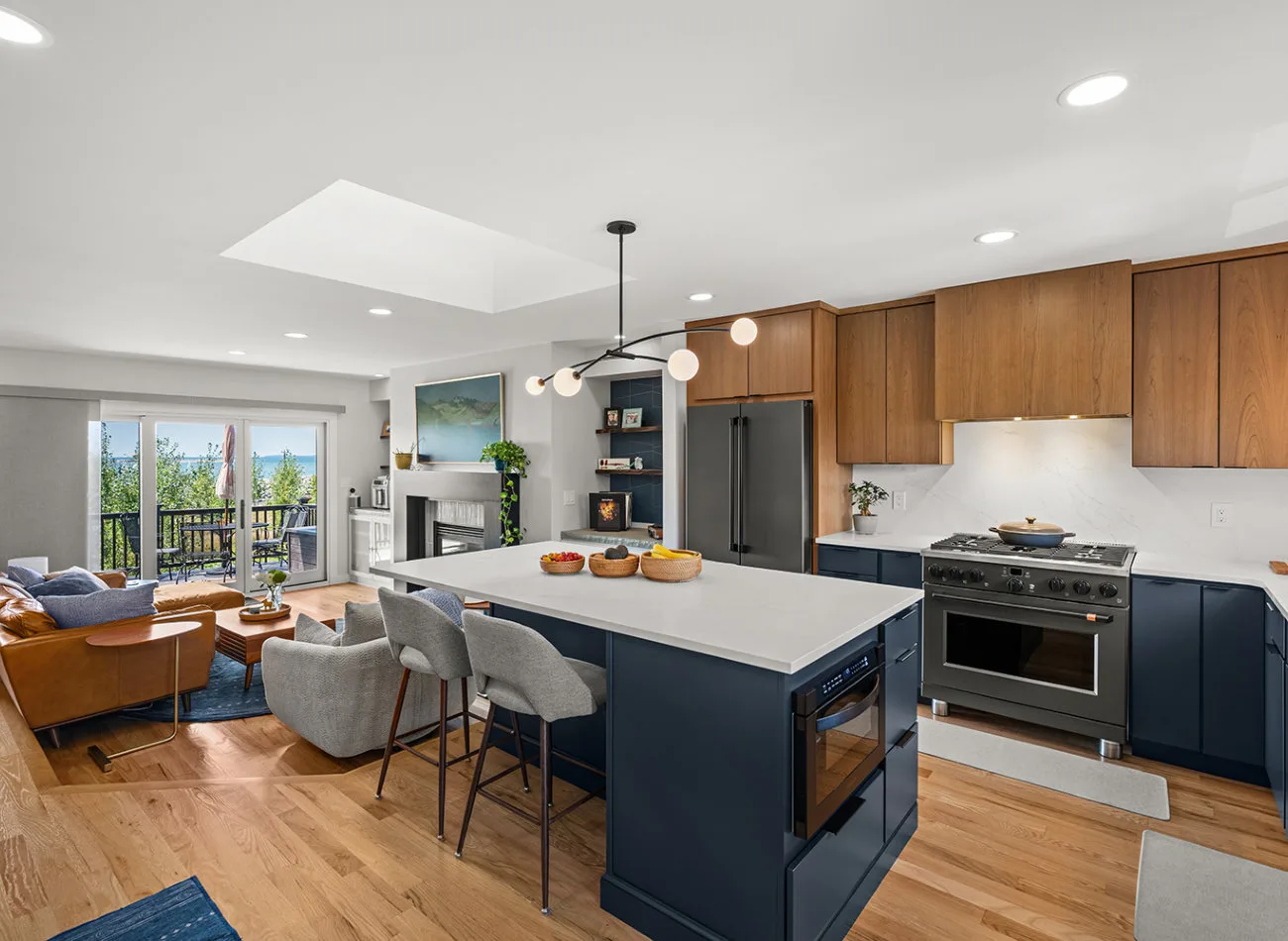
LVP has become a popular kitchen flooring choice because it combines water resistance, easy maintenance, and a relatively approachable price.
It is available in a wide variety of wood-, stone-, and tile-inspired designs and tends to feel softer and warmer underfoot than tile.
LVP may be a good fit if you want:
- A water-resistant floor
- Low maintenance
- A lower initial cost
- A wood look without traditional hardwood
- A slightly softer surface underfoot
Things to consider: LVP cannot be refinished. Deeply damaged planks generally need to be replaced, and quality can vary considerably between products.
Typical lifespan: 10–20 years
Typical installed cost: Approximately $7–$18 per square foot
3. Laminate Flooring: An Affordable Option
Laminate can make sense for homeowners who want the appearance of wood or stone while keeping flooring costs down.
Modern laminate offers a wide range of attractive finishes and is generally easy to clean and maintain.
Laminate may be a good fit if you want:
- A budget-friendly floor
- Lots of style choices
- Good scratch resistance
- Straightforward maintenance
Things to consider: Water resistance varies significantly between products. Traditional laminate is more vulnerable to moisture than porcelain or waterproof vinyl, so the particular product matters when using it in a kitchen.
Typical lifespan: 10–15 years
Typical installed cost: Approximately $5–$12 per square foot
4. Natural Stone: Unique and Timeless
Natural stone can bring texture, variation, and character to a kitchen that manufactured materials can’t completely duplicate.
Granite, marble, limestone, and other stones each have different characteristics, so maintenance and performance depend heavily on the material selected.
Natural stone may be a good fit if you want:
- Authentic natural material
- A one-of-a-kind appearance
- A high-end look
- A potentially very long-lasting floor
Things to consider: Many stone floors require periodic sealing. Some stones are more susceptible to staining, scratching, or acidic substances than others.
Typical lifespan: 25+ years with proper care
Typical installed cost: Approximately $20–$40+ per square foot
5. Hardwood: Warm, Natural and Cohesive
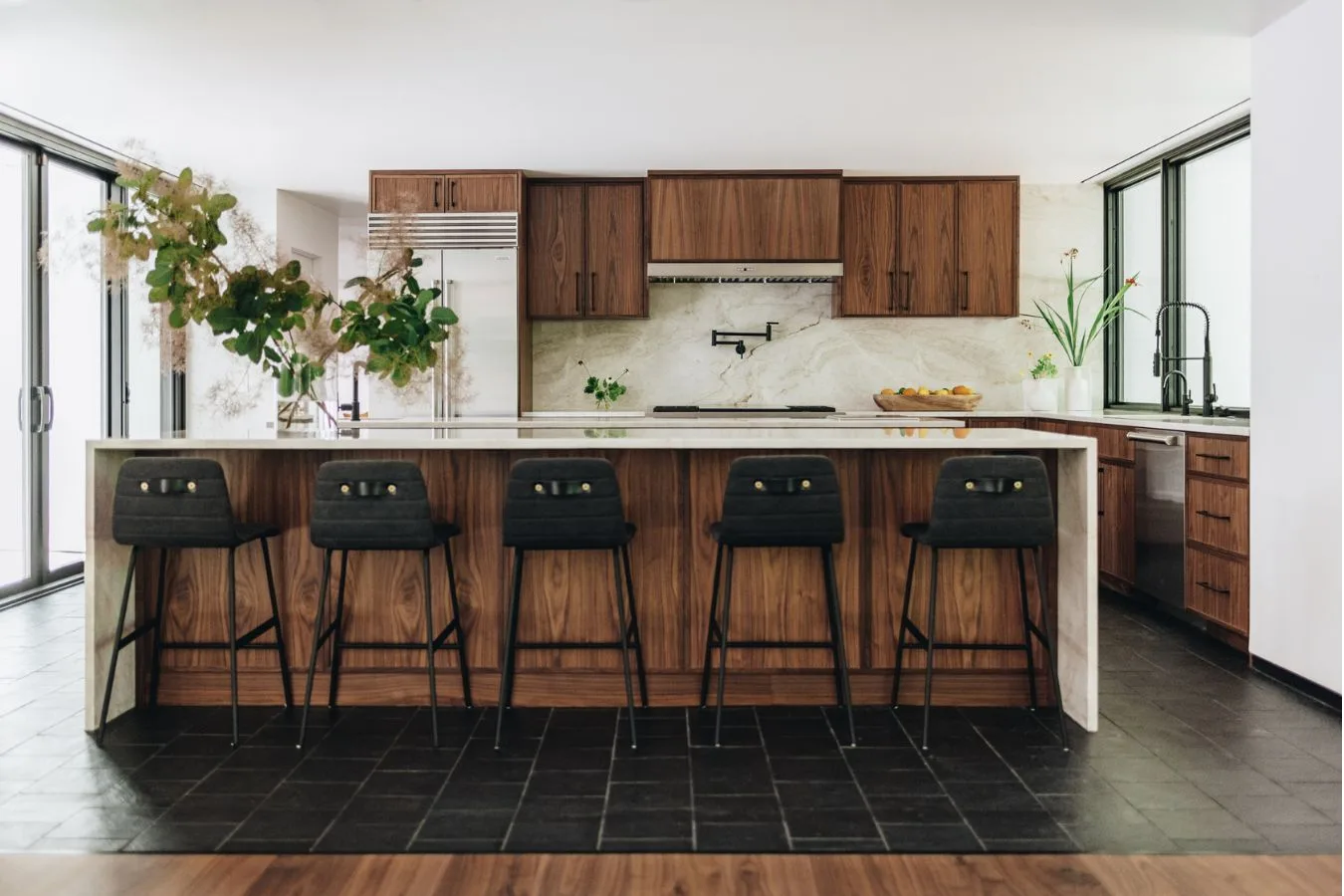
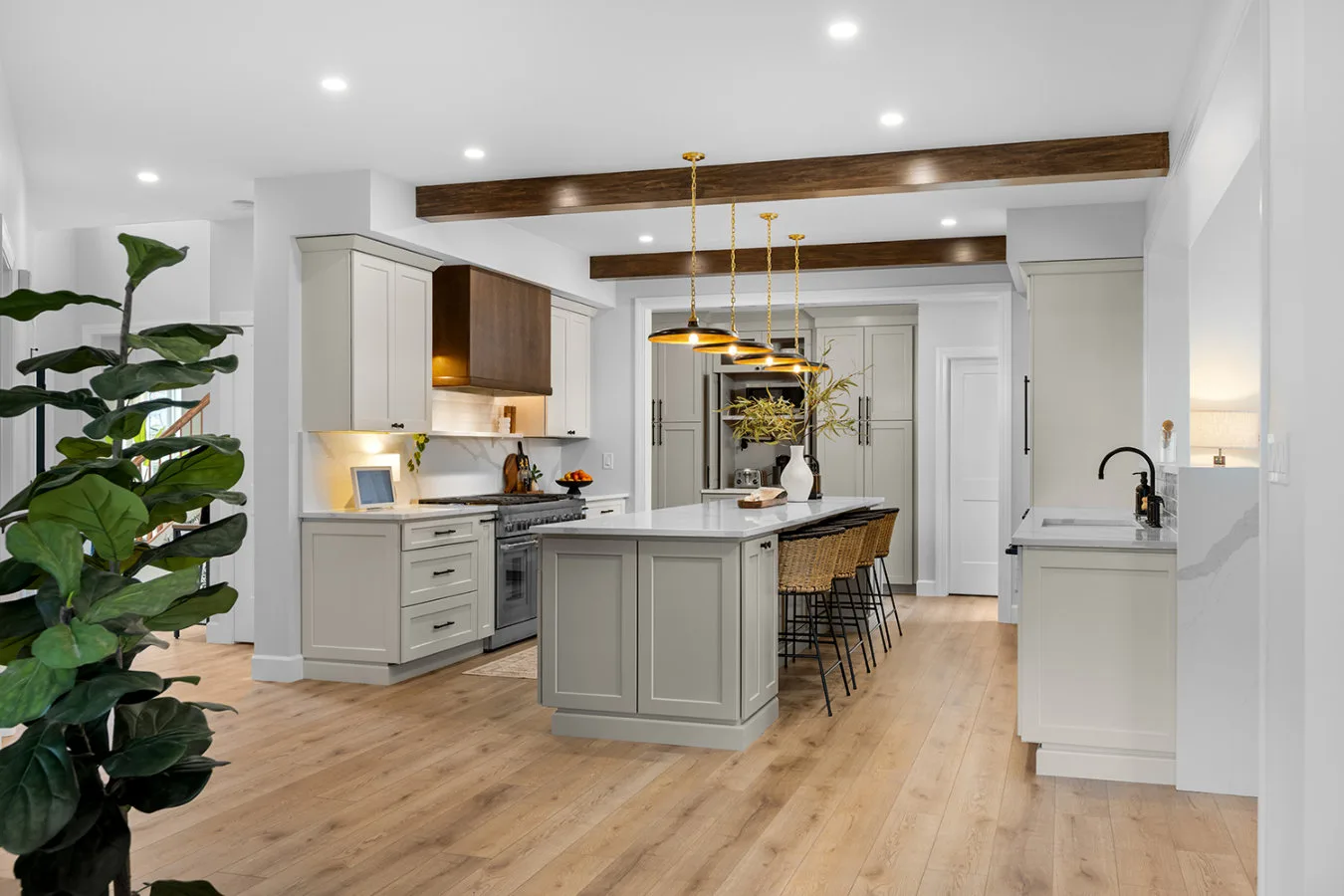
Hardwood brings natural warmth to a kitchen and can be particularly attractive when the kitchen opens directly into other living spaces.
In some homes, continuing hardwood from the living or dining room into the kitchen creates a more cohesive appearance than introducing a completely different flooring material.
The National Wood Flooring Association recommends wiping up spills promptly and avoiding wet or steam mops, making moisture management an important consideration when choosing hardwood for a kitchen.
Hardwood may be a good fit if you want:
- Natural warmth and character
- Flooring that flows into adjoining rooms
- A timeless appearance
- A floor that can potentially be refinished
Things to consider: Wood requires more attention around water. Spills should be addressed promptly, and changes in moisture and humidity can affect the material over time.
Typical lifespan: 25–30+ years with proper care and refinishing
Typical installed cost: Approximately $14–$30 per square foot
6. Hybrid Flooring: Wood-Look With Added Water Resistance
Hybrid flooring is another option for homeowners who like the appearance of wood but want a floor designed to tolerate moisture better than traditional hardwood.
The exact construction and performance vary by manufacturer, so it’s important to compare individual products rather than treating all hybrid flooring as identical.
Hybrid flooring may be a good fit if you want:
- A wood-inspired appearance
- Strong water resistance
- Low maintenance
- A softer alternative to tile
Things to consider: Product quality and construction vary, and unlike solid hardwood, many hybrid floors cannot simply be sanded and refinished decades later.
Typical lifespan: 15–20+ years
Typical installed cost: Approximately $8–$18 per square foot
7. Polished Concrete: Distinctive and Extremely Durable
For the right home, polished concrete can create a striking kitchen floor.
It works particularly well with contemporary, minimalist, and industrial-inspired interiors and is capable of handling substantial traffic.
Polished concrete may be a good fit if you want:
- Exceptional durability
- A modern or industrial aesthetic
- Easy everyday cleaning
- A very long-lasting surface
Things to consider: Concrete is extremely hard underfoot and may feel cold. The feasibility and cost also depend on the existing floor structure and condition.
Typical installed cost: Approximately $3–$12 per square foot, depending heavily on the existing slab and desired finish.
So, What Is the Best Flooring for a Kitchen Remodel?
There isn’t one answer — and there doesn’t need to be.
The best flooring for your kitchen remodel is the one that works with your priorities.
If water resistance is most important: Consider porcelain tile, LVP, or an appropriate hybrid product.
If you want warmth and continuity: Hardwood may make the most sense, particularly if it continues into surrounding rooms.
If budget is the priority: Laminate or LVP may give you the look you want at a lower initial cost.
If you love natural materials: Hardwood or natural stone may be worth the additional maintenance.
If longevity is a major priority: Porcelain, natural stone, hardwood, and concrete can all have exceptionally long lifespans when properly selected, installed, and maintained.
If comfort underfoot matters: LVP, hybrid flooring, or wood may feel more comfortable than tile, stone, or concrete.
5 Questions to Ask Before Choosing Your Kitchen Flooring
Rather than asking only, “Which flooring is best?” ask these five questions:
1. How will our family use this kitchen?
Think about children, pets, entertaining, cooking habits, traffic, and how frequently the kitchen is used.
2. How much maintenance are we comfortable with?
Some homeowners are perfectly happy maintaining hardwood or sealing natural stone. Others want something they can simply clean and forget about.
Neither approach is wrong.
3. What flooring is in the surrounding rooms?
This can be just as important as the kitchen itself, especially in an open floor plan. Sometimes maintaining visual continuity throughout the home should carry more weight than choosing a material based solely on its performance inside the kitchen.
4. How long do we want the floor to last?
Think about whether you’re remodeling for the next decade or creating a kitchen you hope to keep for several decades.
5. What do we actually like?
Don’t underestimate this one.
Flooring covers a significant amount of visual space. You will see and walk on it every day. Performance matters, but so does choosing something that feels right in your home.
The Installation Matters, Too
Whatever flooring you choose, proper installation plays a major role in how it looks and performs over time.
That includes preparing the substrate correctly, accounting for floor heights and transitions, following the manufacturer’s installation requirements, and coordinating the flooring with cabinetry, appliances, plumbing, and the rest of the renovation.
At TBrothers Renovations, we approach flooring as one part of the entire kitchen — not an isolated decision. The goal isn’t to convince every homeowner to choose the same material. It’s to help create a kitchen where the materials, layout, construction, and finishes all make sense together.
Planning a Kitchen Remodel in Buffalo or Western New York?
The best flooring for a kitchen remodel is ultimately the flooring that works for your home, your priorities, and the way you want to live in the finished space.
TBrothers Renovations helps homeowners throughout Buffalo and Western New York plan and complete full kitchen renovations, including the many decisions that go into creating a finished kitchen that works beautifully as a whole.
Ready to start planning? Visit our Get Started page to tell us about your project.