
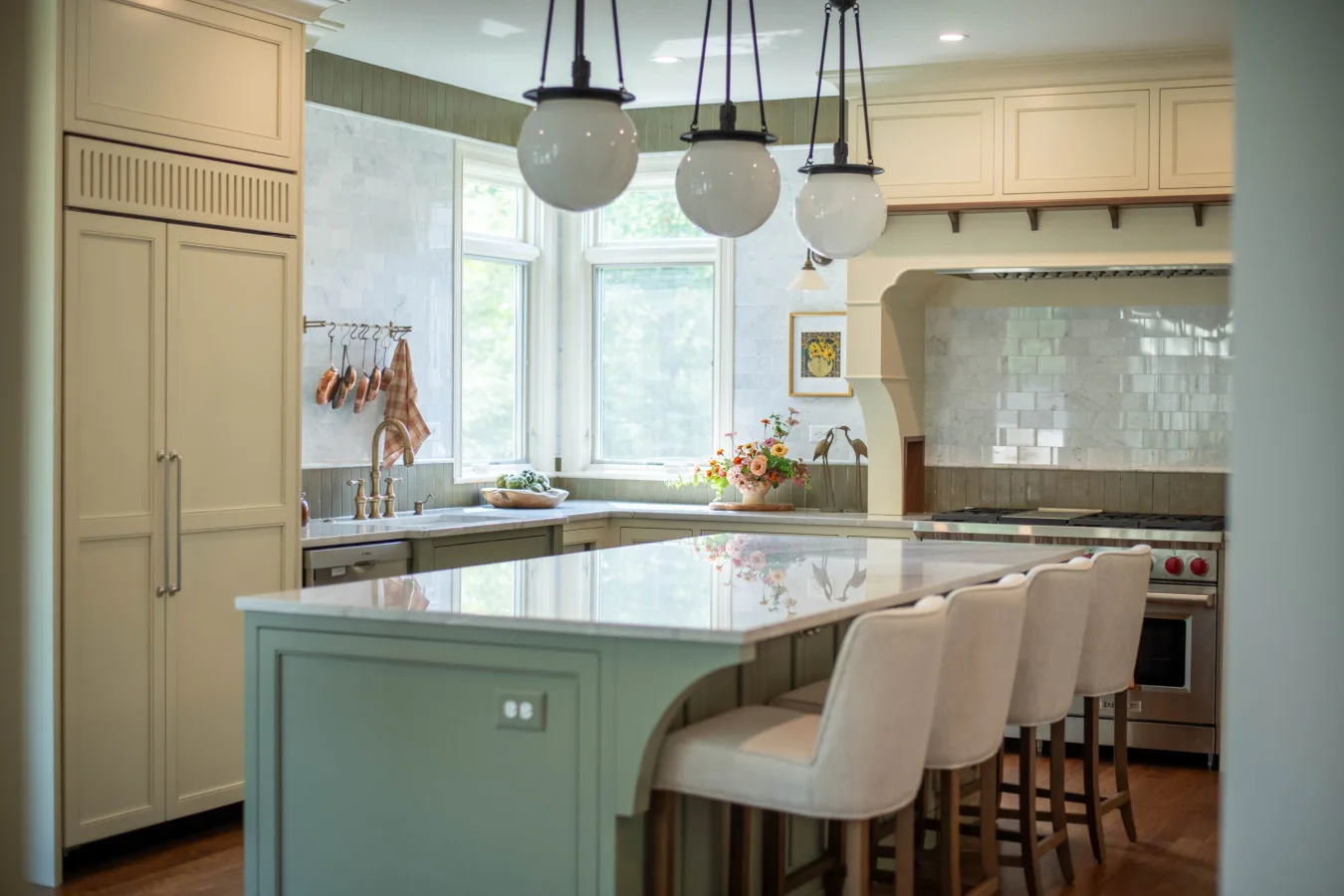
How to choose artisan cabinets for your Buffalo kitchen: materials, styles, and budgeting
Choosing cabinets for a kitchen renovation puts most homeowners in an uncomfortable middle ground. Stock options feel generic and rarely fit older homes well, but fully custom cabinetry feels expensive and opaque without someone to walk you through it.
Here at TBrothers Renovations, we install handcrafted artisan cabinets in Buffalo and Western New York kitchens every week, and we’ve seen firsthand what separates a project homeowners rave about from one they quietly regret.
This guide covers everything you need to make a confident decision: what artisan cabinetry actually is, which materials and styles suit Buffalo’s distinct housing stock, what you’ll realistically pay, and how to find a cabinet maker you can trust. By the end, you’ll know what to ask, what to look for, and how to move forward without second-guessing yourself.
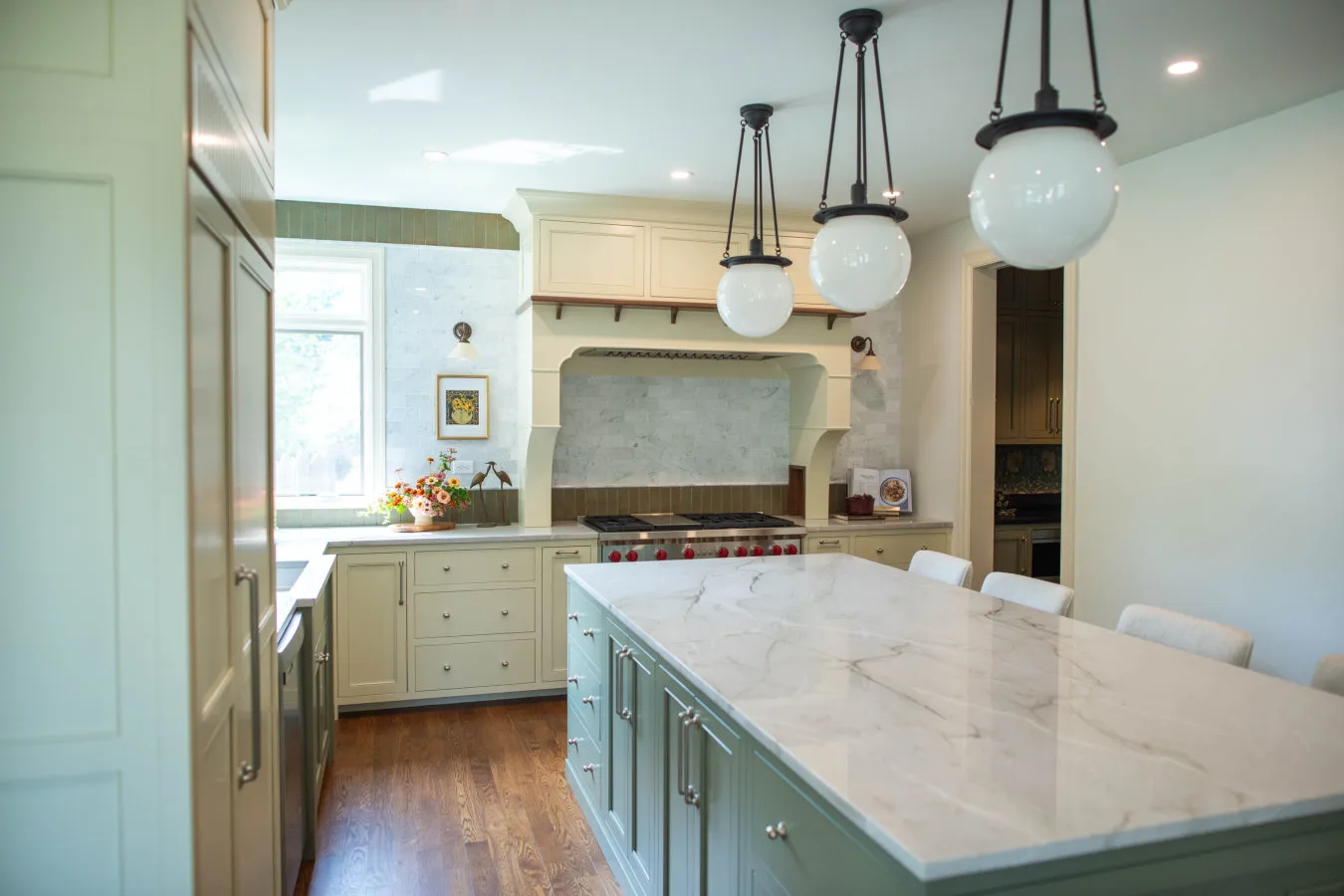
What separates artisan cabinets from stock and semi-custom options
Stock cabinets come in fixed sizes, fixed finishes, and fixed configurations. Semi-custom gives you a bit more flexibility, but you’re still choosing from a catalog. Artisan cabinets are built to your exact dimensions, from materials you choose, using construction methods that prioritize longevity over production speed.
That distinction matters enormously in Buffalo’s older homes, where kitchen footprints rarely conform to the standard 12-inch increments that stock sizing assumes.
How construction method shapes the final product
Three construction styles define the artisan cabinet category.
- Face-frame cabinets attach a wood frame of horizontal rails and vertical stiles to the front of the box, a method common in traditional and craftsman-style American homes.
- Frameless cabinets, sometimes called European-style, mount doors and drawer fronts directly to the cabinet box for a clean, uninterrupted look.
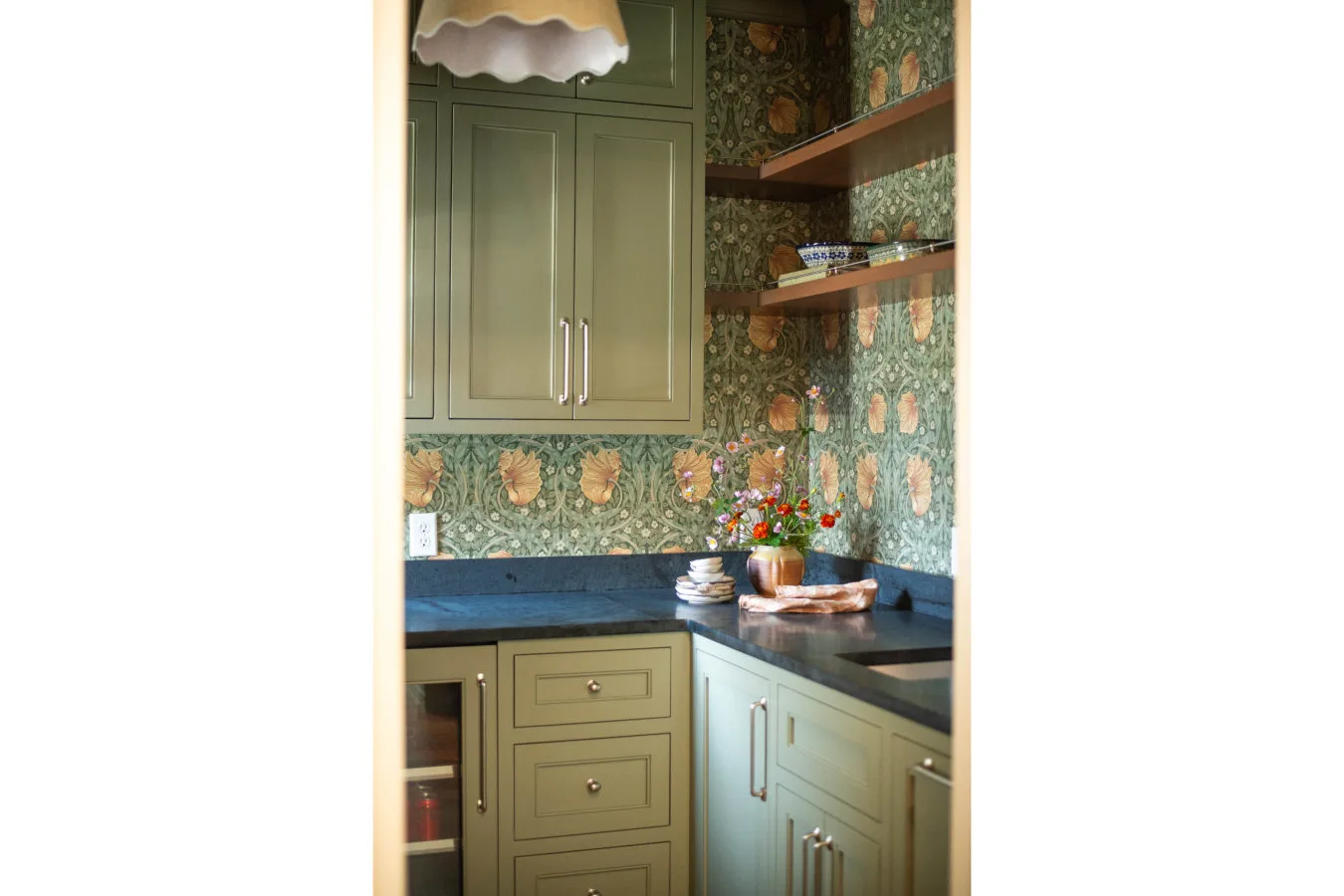
- Inset cabinetry, the most labor-intensive of the three, sets the doors and drawers flush inside the frame opening, achieving a furniture-like appearance with tight, controlled reveals.
The joinery inside the cabinet tells you more about quality than the door style does. Dovetail drawer boxes, mortise-and-tenon frames, and cabinet-grade plywood carcasses signal a maker who builds for decades.
Stapled particleboard and hollow-core doors signal the opposite. Solid wood doors and drawer fronts hold up to daily use and humidity changes far better than MDF cores, which can swell or delaminate when moisture gets in around the sink or dishwasher.
Why custom sizing matters in a Buffalo kitchen
In a home built in 1922, the kitchen walls aren’t square, the ceiling height doesn’t match modern standards, and the floor may slope a quarter inch from one end to the other. Custom cabinet makers build to those actual conditions.
Stock cabinets require filler strips to cover gaps, and those strips are the first thing a buyer notices when they walk into a kitchen for a showing. Proper artisan cabinet work eliminates them entirely, giving you a finished, intentional result rather than a workaround.
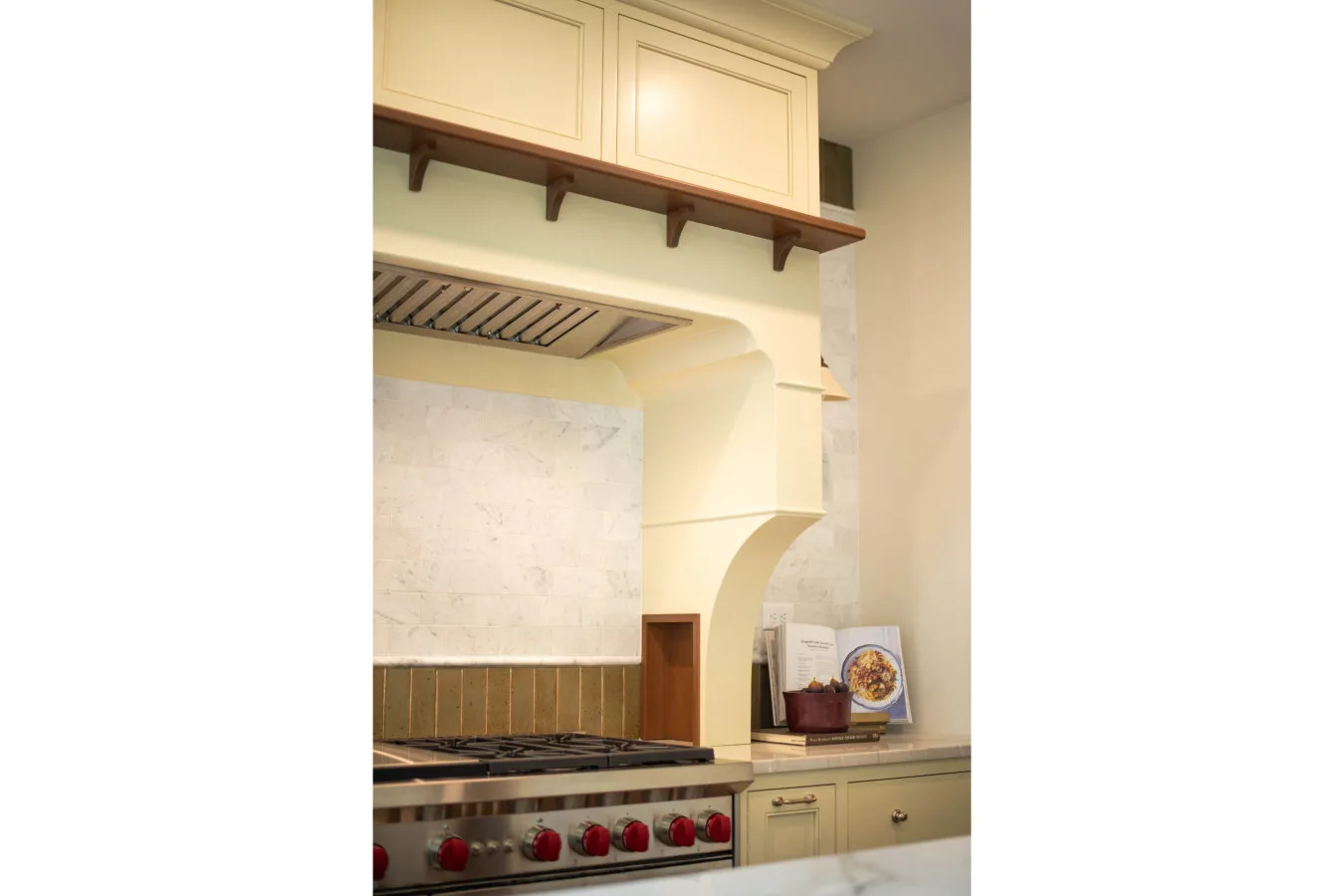
Choosing your wood, finish, and hardware for artisan cabinetry
These three choices carry the most weight in determining how your kitchen looks, performs, and ages. Making them in the right order, wood first, then finish, then hardware, keeps decisions logical and avoids expensive do-overs.
Finish types: what holds up in a working kitchen
- Painted cabinets offer the most color flexibility but require a quality substrate and careful application. Stain plus a clear coat keeps the grain visible and works well on oak, cherry, and walnut, though maple can blotch without conditioning.
- Lacquer produces a beautiful result but offers less resistance to harsh cleaners and standing moisture.
- Conversion varnish is the most durable option available: it’s chemically resistant, stands up to the grease and steam a real kitchen produces, and requires professional spray equipment to apply correctly. For a busy household, it’s the clear performance choice.
Before committing to any finish, ask your cabinet maker for a physical sample on the actual wood species you’ve selected. Color looks different on a paint chip than it does on maple or white oak, and grain texture changes how a finish reads across a full panel. Approve the sample in your kitchen’s actual lighting before signing off on the order.
Hardware: the details that define daily use
- Concealed soft-close hinges work in nearly every modern kitchen. They stay invisible when the doors are closed, allow precise alignment adjustments, and eliminate the sound of slamming cabinet doors.
- Surface-mount hinges are the right choice when visible hardware is part of the design, as in craftsman or furniture-style cabinetry.
For drawer slides, undermount hardware provides the cleanest look and the smoothest travel. Side-mount ball-bearing slides are a solid budget-conscious choice for heavy drawers.
On pulls and knobs, match the metal finish to your kitchen’s palette: brass for warmth, matte black for contrast against lighter cabinetry, brushed nickel as a neutral that works alongside most colors.
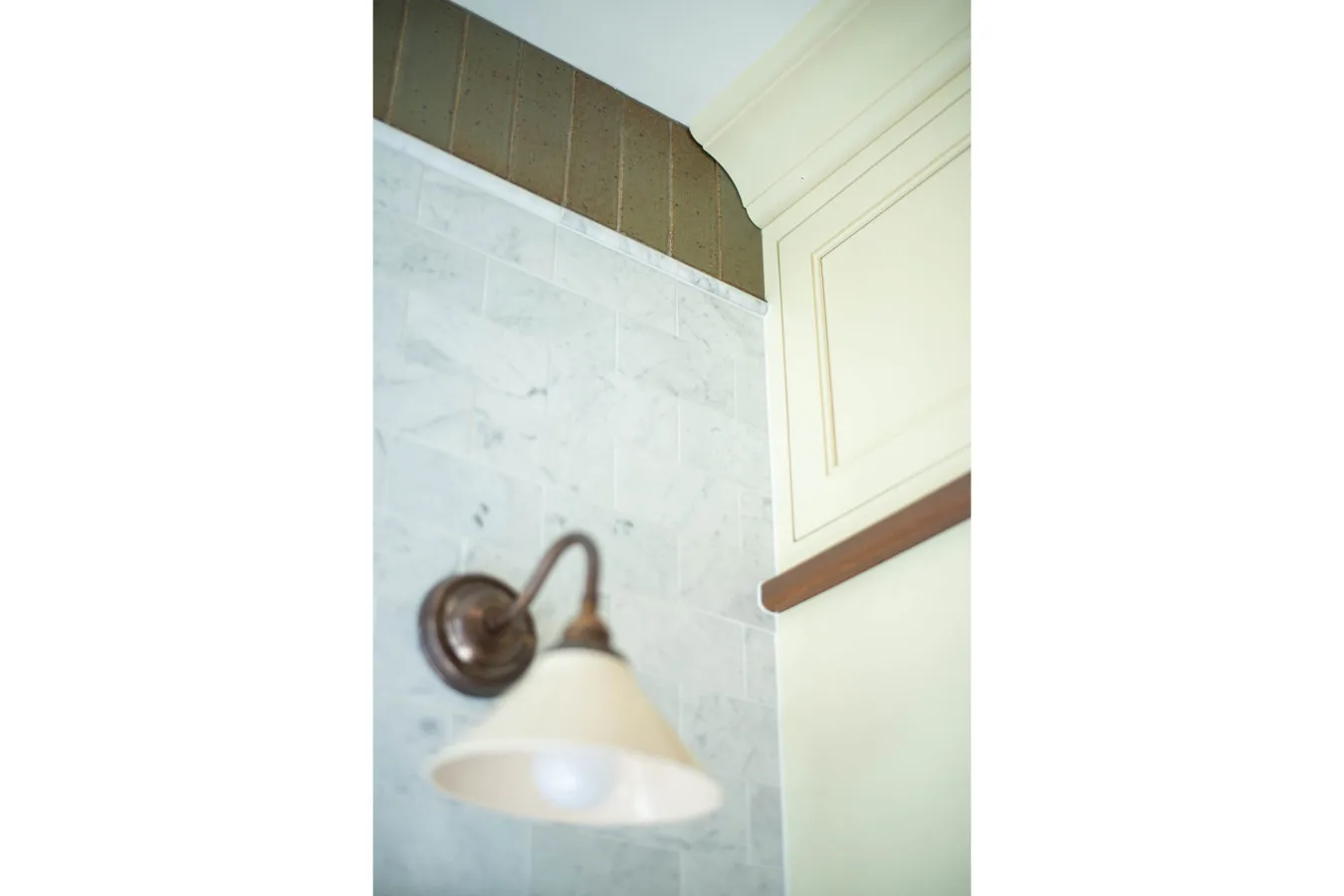
Matching artisan cabinet styles to Buffalo kitchen layouts and home architecture
Buffalo’s housing stock is one of its defining characteristics. The city has an unusually dense concentration of homes from distinct architectural periods, Elmwood Village Victorians, North Buffalo Craftsman bungalows, South Buffalo Colonials, and the kitchen cabinetry should echo that character rather than fight it.
Reading your home’s architecture
- Craftsman bungalows from the 1910s through 1930s are built for natural materials, visible joinery, and a sense of honest construction. Shaker-style or simple recessed-panel doors in quarter-sawn oak or walnut, with aged bronze hardware, feel authentic in these kitchens.
- Victorian-era homes from the 1880s through early 1900s carry more ornament and formality; raised-panel or inset doors with brass or glass hardware, in painted period colors or dark-stained cherry, align with that character.
- Colonial Revival homes from the mid-twentieth century call for symmetrical layouts, traditional raised-panel or narrow Shaker doors, and finishes in cream, white, or muted sage.
- Mid-century ranches want the opposite: flat-slab or thin Shaker doors, horizontal wood-grain veneers, and minimal hardware like edge pulls or simple round knobs.
Ceiling height and window placement in older Buffalo homes regularly demand heights and configurations that stock sizing can’t provide. A nine-foot ceiling in an 1890s Victorian calls for cabinet proportions that simply don’t exist in a catalog. Custom cabinetry solves this without compromise.
Fitting cabinetry to your kitchen’s layout
- In galley kitchens, solid upper cabinet runs that extend to the ceiling can feel oppressive. Consider glass-front uppers or open shelving breaks to maintain visual airiness.
- In L-shape and U-shape kitchens, corner solutions, whether blind corners, lazy Susans, or diagonal cabinets, execute far more cleanly in custom work than in stock sizing.
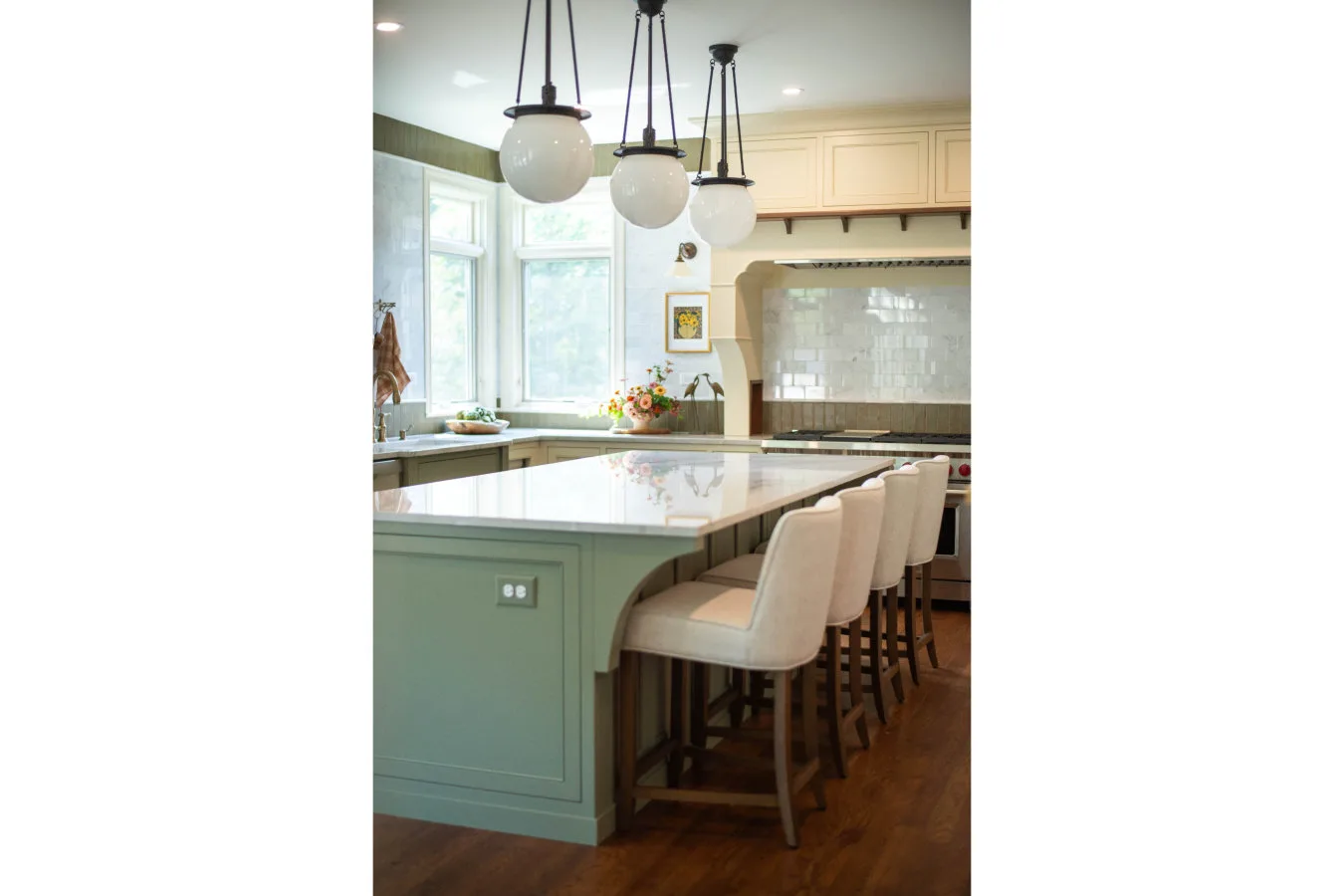
- Open-plan kitchens with an island require careful coordination: the island cabinetry needs to complement the perimeter run in wood species, finish, and hardware. Decide on this coordination before finalizing any drawings.
What artisan cabinets cost in 2026
The market range for artisan custom cabinetry runs from $500 to $1,200 per linear foot installed, with most mid-range projects averaging $700 to $900 per linear foot. A practical example: a 20-linear-foot Buffalo kitchen typically lands between $10,000 and $24,000 installed, depending on wood species, finish complexity, and hardware grade. Specialty woods, hand-painted finishes, and intricate detailing push toward the higher end of that range.
A standard quote typically includes cabinet boxes, doors, drawers, finish, standard hardware, delivery, and installation. What it commonly excludes: countertops, demolition, plumbing, electrical work, and appliance installation. Confirm exactly what’s in and out of scope before comparing quotes from different makers, because a lower number on one proposal may simply mean more items are excluded.
How to find and vet the right artisan cabinet maker in Western NY
A beautiful showroom or a polished website doesn’t tell you how a cabinet maker handles a problem mid-project. These are the questions and signals that actually matter.
Key questions to ask before signing anything
Start with construction. Ask whether the cabinets are face-frame, frameless, or inset, and what materials and thicknesses are used for the box, shelves, door fronts, and drawer boxes. Ask specifically how drawer boxes are joined, dovetail joinery is the standard for quality artisan cabinet work.
Then cover finish, quote scope, and schedule.
- On finish: ask whether it’s shop-applied or on-site, what product is used, how many coats are included, and whether you can approve a physical sample on the actual wood.
- On the quote: confirm whether it’s itemized by cabinets, hardware, finish, delivery, and installation, and ask explicitly what is excluded.
- On schedule: ask when the lead time begins, whether at deposit, contract signing, or drawing approval, and who installs the cabinets.
Signals that tell you a maker is credible
Verify licensing and current liability insurance directly with the insurer, not just by viewing a certificate the company provides. Ask to see a portfolio of comparable completed projects, including work that is at least two years old so you can assess how the finish and joinery have held up over time. Require a written warranty covering cabinets, finish, hardware, and installation labor. Check independent reviews on Google, Houzz, or the BBB and look for consistent patterns across multiple years, particularly around how the company handled problems and whether punch-list items were resolved promptly.
Why working with a full-service local contractor changes the experience
At TBrothers Renovations, we work with Buffalo and Western NY homeowners through a structured planning process that starts before a single cabinet dimension is finalized. We begin by understanding your lifestyle, how your family actually uses the kitchen, what frustrates you about the current layout, and what the renovation needs to accomplish. That conversation shapes every decision that follows.
Our design partnership with Signature Design Studio gives clients access to professional design support integrated directly into the renovation process. Cabinet selection, layout, finish choices, and hardware decisions are coordinated together, not handled in separate conversations with separate vendors.
During installation, we use dust-reduction tools and jobsite protection practices that matter especially in older Buffalo homes, where dust moves quickly through open floor plans and HVAC systems. The result is a single-point-of-contact experience where you’re not the project manager holding together a designer, a cabinet shop, and an installer on your own.
Keeping your custom cabinets looking great for decades
Custom cabinetry is built to last, but it requires basic maintenance to reach its potential. The routine is simple once you know what each finish needs.
- Daily cleaning by finish type
For painted cabinets, wipe with a lightly damp microfiber cloth for daily marks and diluted mild dish soap for grease. Avoid abrasive pads, paper towels, bleach, or any cleaner with ammonia, these break down the topcoat faster than normal wear. Touch up chips promptly before moisture gets under the finish at exposed wood edges. For stain-and-clear-coat cabinets, use the same gentle routine and dry especially carefully around joints, seams, and door edges. Apply cleaner to the cloth rather than directly to the cabinet surface.
- Managing humidity in Western NY homes
Buffalo’s climate creates wide seasonal swings in relative humidity: cold, heated winters drop indoor humidity significantly, while summer humidity rises. Solid wood expands and contracts with these cycles, which is normal and expected. Quality cabinet makers build for this movement using floating panels, slotted fasteners, and properly designed joinery.
Your job is to keep indoor humidity between 35 and 50 percent year-round. A humidifier in winter prevents excessive shrinkage at joints and panel seams. Inspect cabinet interiors under sinks annually for moisture intrusion, catching a slow leak early protects both the cabinet boxes and the finish before damage works its way through the structure.
Frequently asked questions about artisan cabinets
- How long does it take to get artisan cabinets made and installed?
From initial consultation to completed installation, most custom cabinet projects in the Buffalo area take twelve to twenty weeks. Design and detailing typically runs two to four weeks, fabrication eight to twelve weeks, and installation two to five working days. Specialty finishes or exotic wood species can push fabrication toward the longer end of that window.
- What warranty should I expect on custom kitchen cabinets?
A reputable artisan cabinet maker should provide a written warranty covering cabinet boxes, door and drawer fronts, finish, hardware, and installation labor. Warranty terms vary, but one to five years on finish and hardware and a longer structural warranty on the cabinet boxes themselves is a reasonable baseline to expect. Get the terms in writing before signing any contract.
- How do I maintain artisan cabinetry over time?
Daily cleaning with a lightly damp microfiber cloth handles most kitchen messes. Avoid ammonia-based cleaners, abrasive pads, or bleach, all of which degrade cabinet finishes over time. Managing indoor humidity between 35 and 50 percent year-round is equally important in Western New York, where seasonal swings can cause solid wood to expand and contract noticeably.
- What’s the difference between artisan cabinets and semi-custom cabinets?
Semi-custom cabinets offer limited size and finish options within a manufacturer’s catalog. Artisan cabinets are built from scratch to your exact dimensions, chosen materials, and specified construction methods, with no filler strips, no catalog constraints, and no compromises on joinery quality.
Ready to Explore Custom Cabinetry?
Choosing custom cabinetry is a multi-decision process, and every choice connects to the others. The right wood, finish, construction method, and style all matter equally, and the right cabinet maker holds them together with a process that protects your home as much as it improves it.
Your action steps are clear: define your style by reading your home’s architecture, set a budget that accounts for the full scope beyond just the cabinet price, ask detailed questions at every quote, and choose a maker with verifiable licensing, a strong track record, and a written warranty. Get all of those commitments in writing before signing anything.
If you’re ready to commission artisan cabinets for your Buffalo kitchen, reach out to our team at TBrothers Renovations. We’ll start with a consultation to understand your goals, your kitchen, and your timeline, and we’ll build a process around your project from there.
TBrothers Renovations specializes in kitchen remodels throughout Western New York. We design and install artisan cabinets coordinated with your home’s character. Our full-service approach ensures your kitchen renovation is seamless from design through completion.