

No-Threshold Shower for Seniors Buffalo NY: Complete Guide to Safe, Accessible Bathrooms
Planning a no-threshold shower for seniors in Buffalo NY? You’re making one of the smartest home modifications for aging in place safely and independently. Also called curbless showers or zero-entry showers, these barrier-free designs eliminate the dangerous step-over that causes thousands of bathroom falls each year—particularly hazardous for Western New York seniors navigating wet surfaces.
At TBrothers Renovations, we’ve served Buffalo and Western New York since 2015, creating bathroom renovations that combine safety, independence, and beautiful design. We understand that no-threshold showers aren’t just about removing a curb—they require precise waterproofing, exact slope calculations, and expert installation to function properly without leaking onto your bathroom floor.
What Is a No-Threshold Shower?
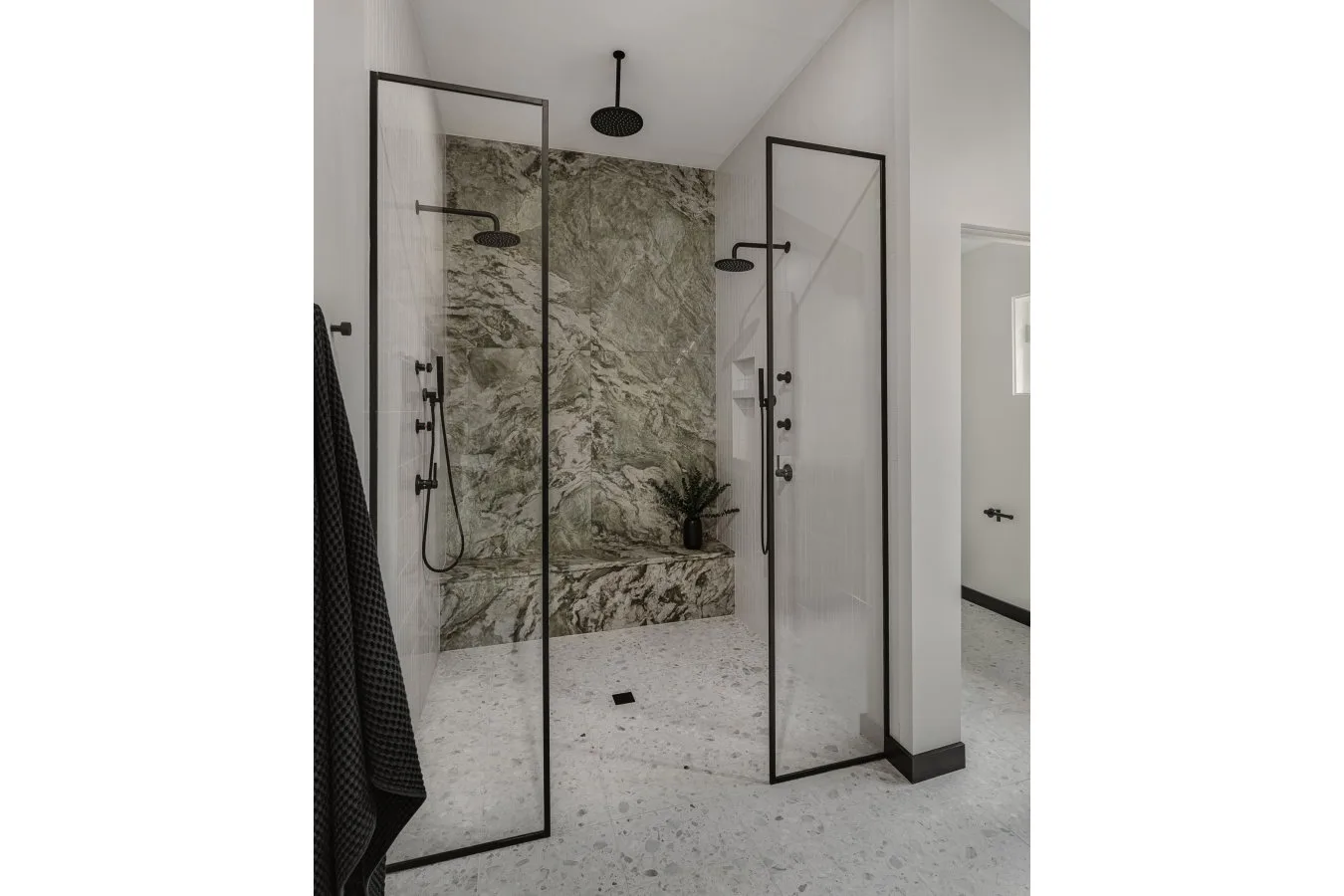
A no-threshold shower, also called a curbless shower or zero-entry shower, eliminates the raised curb or lip traditionally found at shower entrances. Instead of stepping over a 4-6 inch barrier to enter the shower, you simply walk straight in at floor level.
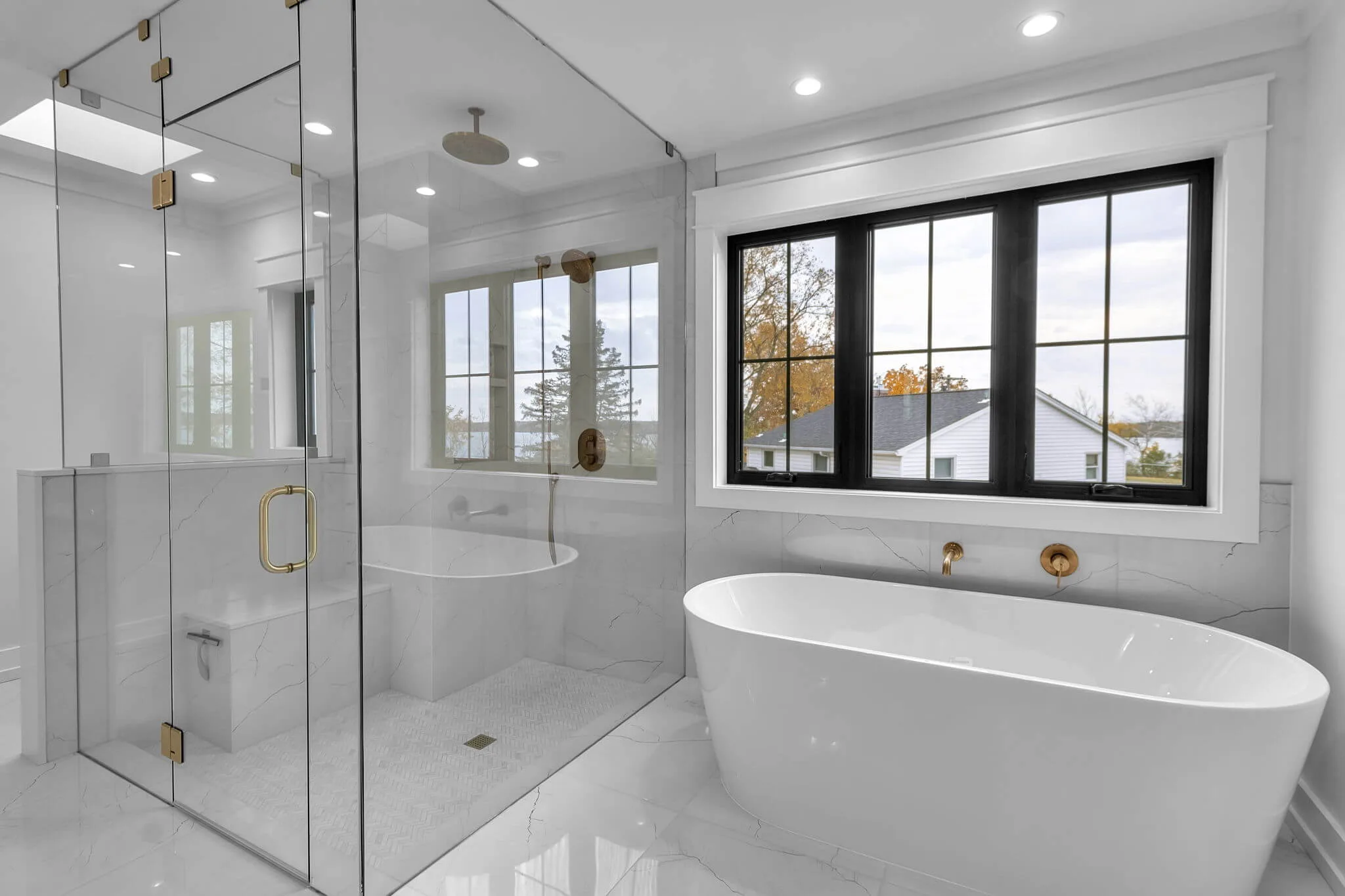
The shower floor slopes gradually toward the drain to contain water while remaining completely flush with the surrounding bathroom floor. This creates a seamless, barrier-free entrance that’s safer for seniors, easier for wheelchair users, and more attractive for modern bathroom design.
Why “No-Threshold” Matters for Buffalo Seniors
Trip and fall hazards increase dramatically as we age. Balance decreases, mobility becomes limited, and reaction time slows. That traditional 6-inch shower curb becomes a serious obstacle—especially when wet, soapy, and slippery.
According to the CDC, one in four Americans aged 65 and older falls each year, and bathrooms are the most common location. Many of these falls occur when entering or exiting showers. A no-threshold shower eliminates this specific hazard entirely.
No-threshold showers allow seniors to maintain independence longer. They can shower safely without assistance, use a shower chair that rolls directly in, and maintain their daily routines without fear or difficulty. For many Buffalo families, this modification means parents can stay in their homes for years longer rather than moving to assisted living.
Buffalo’s Aging Housing Stock
Many Buffalo homes were built in the 1920s-1950s when accessibility wasn’t considered. These homes have small bathrooms with traditional tubs and high-curb showers that become increasingly difficult as homeowners age. Victorian, Colonial, and Craftsman homes throughout Clarence, Williamsville, and Buffalo’s neighborhoods need accessibility updates for aging residents.
No-Threshold Shower Costs in Buffalo NY
Understanding realistic costs helps you budget appropriately and identify quotes that are unrealistically low (indicating corner-cutting) or unnecessarily high.
- Basic No-Threshold Shower: $8,000-$12,000
This includes removing your existing tub or shower, creating proper floor slope for drainage, installing WEDI or equivalent waterproofing system, quality non-slip tile flooring with proper slope, tiled walls to appropriate height, frameless glass panel (not full enclosure), and standard fixtures with grab bar installation.
- Mid-Range No-Threshold Shower: $12,000-$18,000
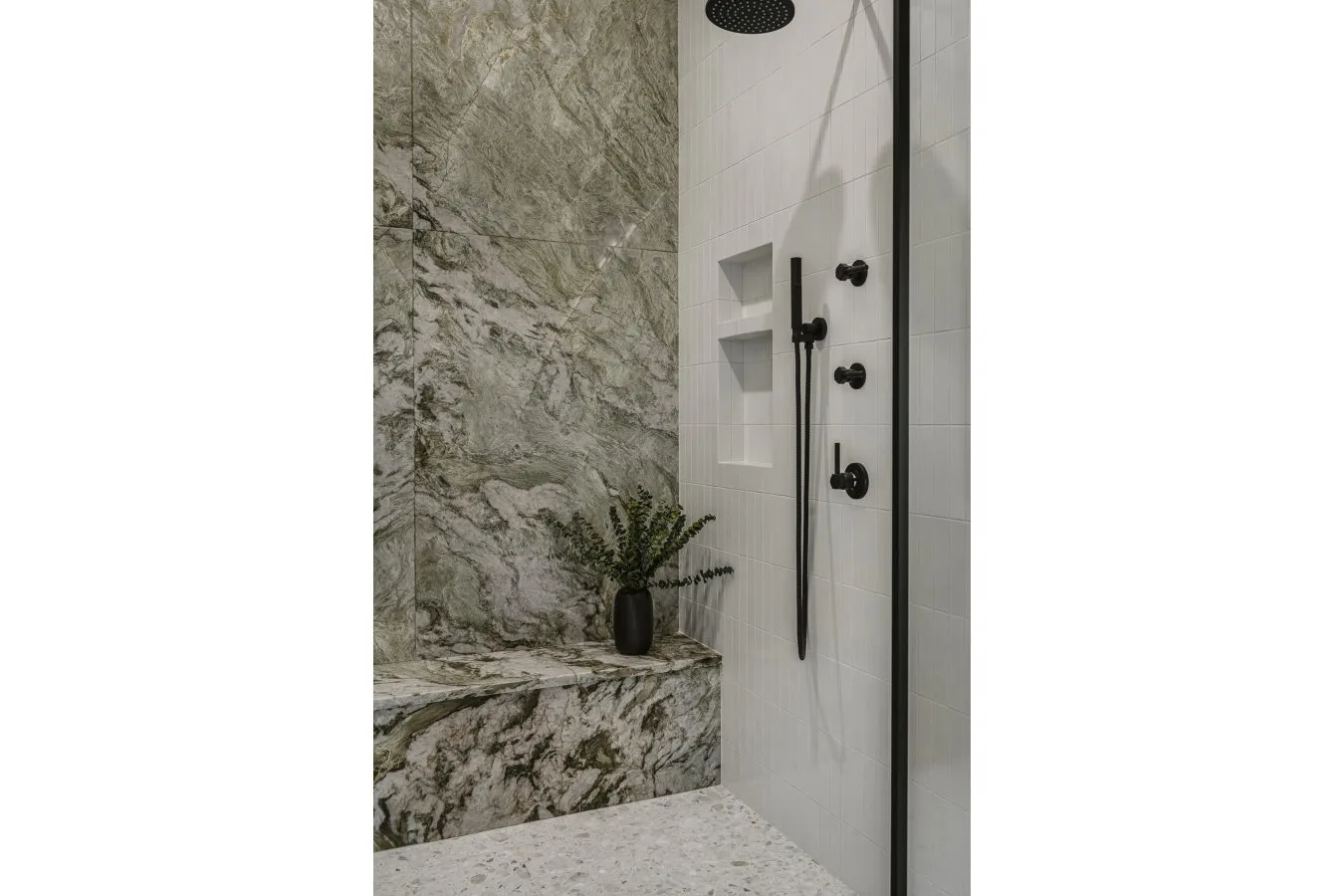
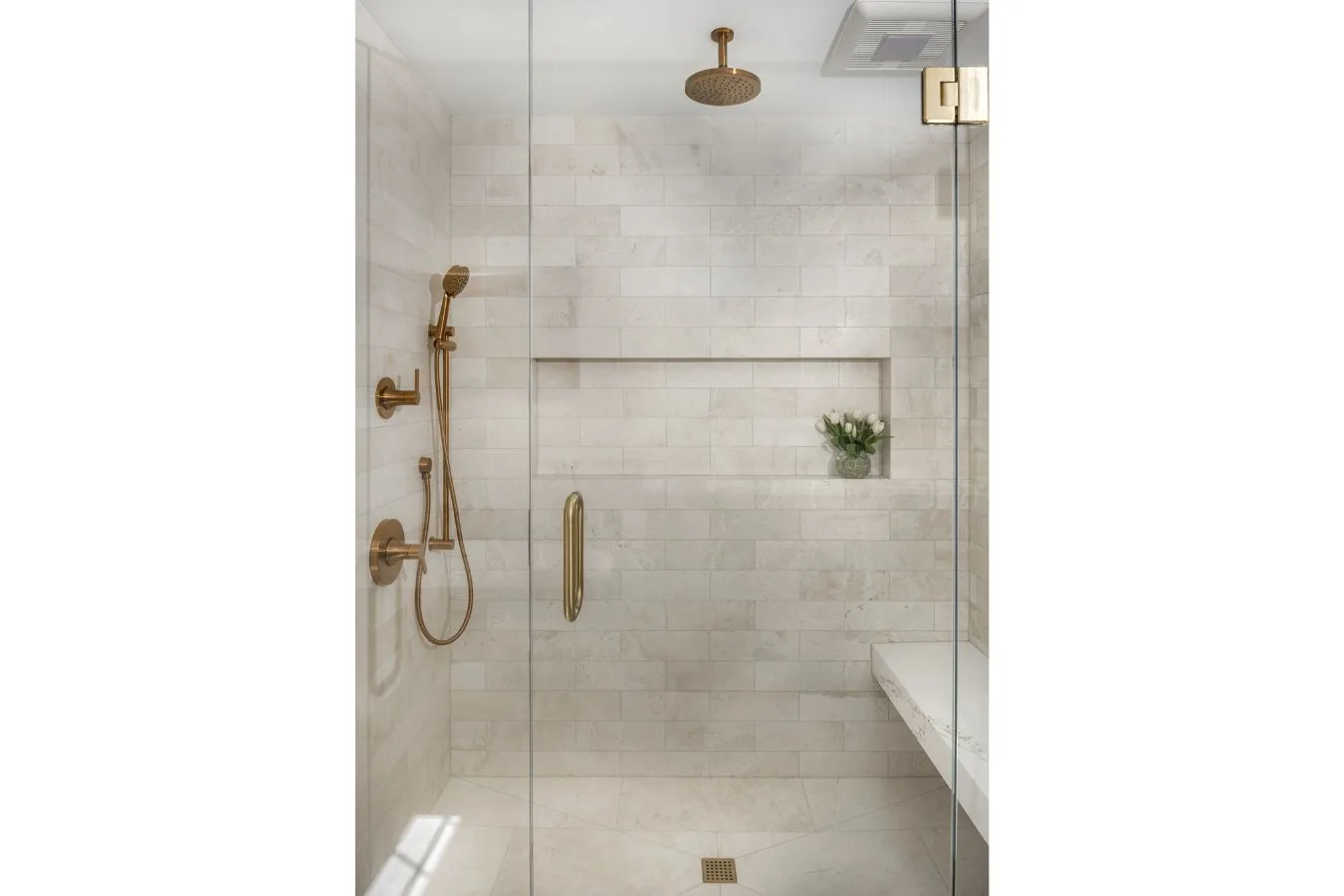
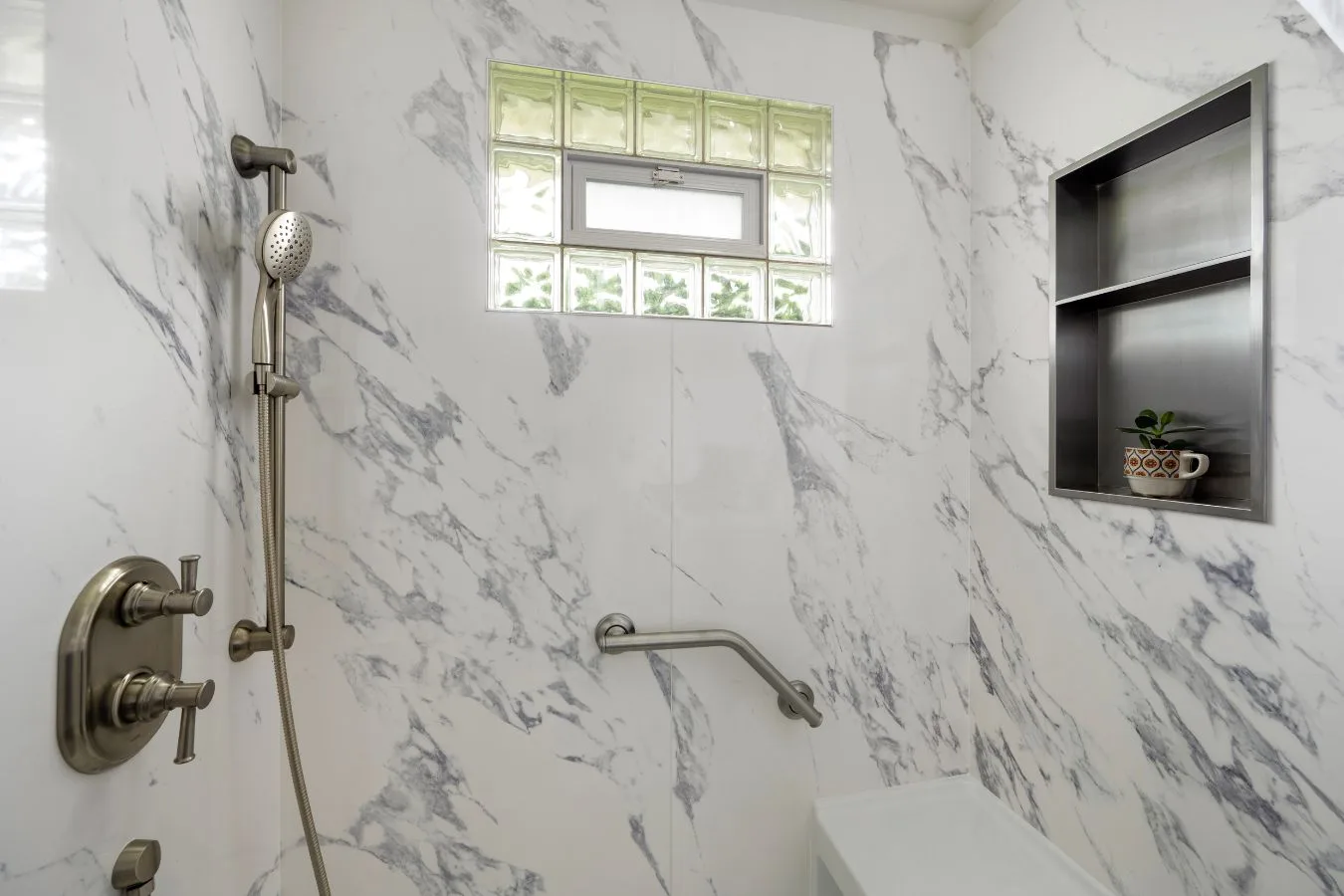
This level adds premium non-slip tile options, full glass enclosure instead of single panel, built-in shower bench or seat, shower niche for toiletries, upgraded fixtures and controls, and additional safety features like handheld shower head.
- Premium No-Threshold Shower: $18,000-$28,000
Premium installations include luxury non-slip tile or stone, complete custom glass enclosure, integrated seating with proper waterproofing, multiple shower heads or body sprays, high-end safety fixtures, and complete bathroom remodel coordinating with shower.
What Affects No-Threshold Shower Costs
- The biggest cost factor is your existing bathroom structure.
If your bathroom floor can accommodate the required slope without modification, costs stay lower. If the floor must be raised, lowered, or structurally modified, costs increase. - Tile selection significantly impacts price.
Basic non-slip ceramic tile costs $3-$6 per square foot installed. Premium non-slip porcelain or textured stone costs $8-$15 per square foot. The shower floor alone requires 16-25 square feet depending on size. - Glass enclosures
Glass enclosures range from $800 for a simple frameless panel to $3,000-$5,000 for complete custom frameless enclosures. - Built-in features
Benches and niches add cost but significantly improve functionality. - Safety features are essential for senior showers.
Quality grab bars, handheld shower heads with slide bars, non-slip treatments, and textured tiles cost more than standard options but are non-negotiable for safety.
What Makes No-Threshold Showers Complex to Install
No-threshold showers require significantly more expertise than standard shower installations. Understanding these complexities helps you appreciate why experienced contractors cost more—and why they’re worth it.
The Slope Challenge:
Traditional showers contain water with a raised curb. No-threshold showers must rely entirely on floor slope to direct water toward the drain without allowing it to escape onto your bathroom floor.
Building codes require minimum 1/4 inch per foot slope toward the drain. This seems simple but becomes complex when you’re creating a gentle, even slope that feels comfortable underfoot (not too steep) while effectively draining water (not too shallow).
The slope must extend beyond the shower area into the bathroom to create a slight threshold that’s invisible but functional. Get the slope wrong by even 1/8 inch, and water pools or escapes, creating the exact slip hazard you’re trying to eliminate.
Waterproofing Is Critical:
With traditional showers, the curb provides a secondary water barrier. No-threshold showers have no such backup. Every drop of water that penetrates the tile will saturate whatever’s below unless you have perfect waterproofing.
At TBrothers Renovations, we’re WEDI Certified, using an advanced waterproofing system that provides 100% moisture protection. This system creates a completely waterproof barrier from floor to ceiling, preventing the mold growth and structural damage that occurs when contractors use outdated paint-on membranes or moisture-resistant drywall.
This isn’t optional for no-threshold showers—it’s absolutely essential. One waterproofing failure in a curbless shower can cause $15,000-$25,000 in damage to your bathroom, subfloor, and even rooms below.
Floor Structure Modifications:
Many Buffalo homes—especially older ones—have floor structures that can’t accommodate the required slope without modification. The shower floor must slope toward the drain while the bathroom floor remains level, creating a height differential that must be managed.
Sometimes this requires lowering the shower floor area by cutting into joists (requiring structural engineering). Other times it means raising the entire bathroom floor to create room for slope (affecting door clearances and transitions). Experienced contractors assess your specific structure and recommend the appropriate solution.
Linear Drains vs. Center Drains:
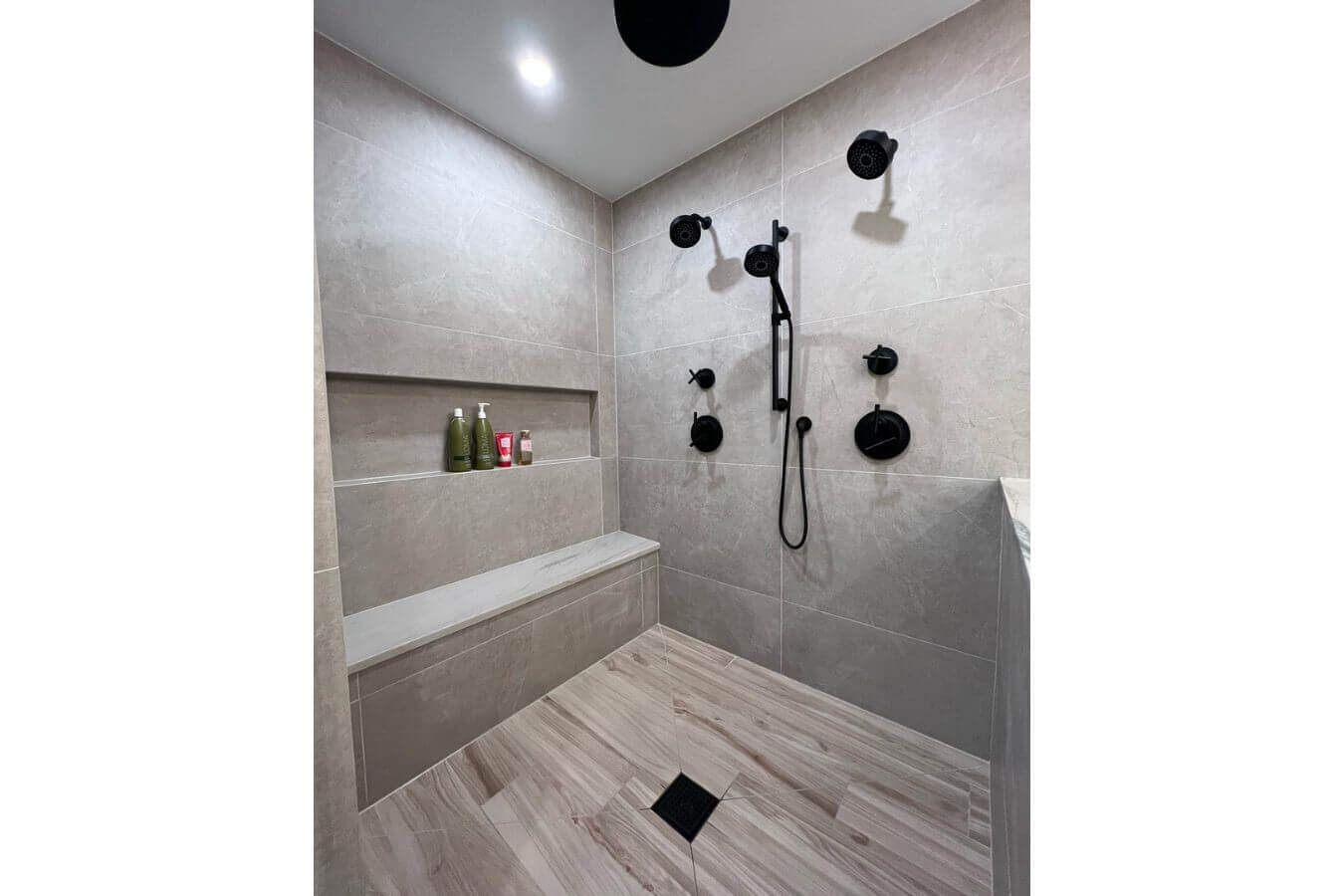
No-threshold showers work best with linear drains—long, narrow drains typically placed along one wall. These allow water to drain from one direction with a simpler, more comfortable slope.
Center drains require sloping from all four directions, creating a more complex floor that can feel awkward underfoot. Linear drains also create a more modern aesthetic and easier tile installation with larger format tiles.
The Buffalo Home Factor
Older Buffalo homes present unique challenges. Plaster walls require different techniques than drywall. Cast iron plumbing may need updates. Floor joists may be undersized by modern standards. Experienced local contractors understand these Buffalo-specific issues.
Essential Safety Features for Senior No-Threshold Showers
Beyond eliminating the threshold, several features make showers truly safe and functional for Buffalo seniors.
Grab Bars—Properly Installed:
Grab bars prevent falls and provide stability, but only if installed correctly into solid blocking behind walls. Surface-mounted grab bars that rely on tile or drywall pull out when you actually need them.
Quality installation means solid wood or metal blocking installed during construction, bars positioned based on user height and needs, and ADA-compliant bars that support 250+ pounds. Multiple bars at different heights serve different purposes—entering, standing, sitting.
Grab bars should be attractive, not institutional. Modern options in brushed nickel, oil-rubbed bronze, or matte black coordinate with your fixtures and look intentional, not medical.
Non-Slip Flooring Is Non-Negotiable:
Wet tile is inherently slippery. For senior showers, you need tile specifically designed for slip resistance. Look for tiles with textured surfaces that provide traction, matte finishes rather than glossy, and ratings indicating slip resistance (COF rating of 0.60 or higher for wet areas).
Small format tiles like 2×2 inch mosaics provide more grout lines which improve traction. Textured porcelain, natural stone with honed finish, and pebble tile all provide good slip resistance while remaining comfortable underfoot.
Shower Seating:
Built-in shower benches or fold-down seats allow seniors to shower sitting down, reducing fall risk and conserving energy. Benches must be properly waterproofed underneath, positioned at comfortable height (17-19 inches), and structurally supported to hold weight safely.
At TBrothers, we ensure proper waterproofing under all built-in seating using WEDI systems. We’ve seen too many contractor-built benches that trap water underneath, creating mold problems within two years.
Handheld Shower Heads:
Fixed shower heads require standing directly underneath. Handheld shower heads with slide bars allow showering while seated, directing water where needed, and maintaining control throughout the shower.
Quality handheld units with anti-scald valves cost $200-$500 but provide tremendous functional benefit for seniors.
Adequate Lighting:
Bathroom lighting becomes more critical with age. Showers need bright, even lighting that doesn’t create shadows or glare. LED recessed lights rated for wet locations provide good illumination without heat buildup.
Consider lighting placement carefully—you want to illuminate the shower floor to see potential hazards without creating glare on wet surfaces.
Temperature Control:
Anti-scald valves prevent dangerous temperature fluctuations that can cause burns. Thermostatic mixing valves maintain consistent temperature even if someone flushes a toilet or runs water elsewhere. These are essential safety features for seniors whose reaction times have slowed.
Choosing the Right Contractor for No-Threshold Showers in Buffalo
Not all bathroom remodelers have the expertise to install no-threshold showers correctly. Choosing the wrong contractor leads to water damage, improper slope, and safety hazards.
Look for WEDI Certification:
WEDI certification demonstrates advanced waterproofing training—essential for no-threshold showers where waterproofing failures are catastrophic. TBrothers Renovations is WEDI Certified, ensuring we understand and implement proper moisture protection.
Ask contractors: “Are you WEDI certified? What waterproofing system will you use? Can I see photos of your waterproofing installation before tile goes down?”
Verify Experience with Curbless Showers:
General shower experience doesn’t equal no-threshold expertise. Ask to see specific examples of curbless showers they’ve completed. Request references from those projects. Ask how they handle the slope, what challenges they’ve encountered, and how they ensure water stays in the shower.
Confirm Licensed Trades:
No-threshold shower installation requires licensed plumbers for drain work and modifications, and potentially licensed electricians if adding lighting or features. Verify the contractor employs or subcontracts with properly licensed trades.
Check Insurance Coverage:
No-threshold shower installation involves structural modifications and waterproofing where mistakes are expensive. Verify general liability insurance of at least $1 million and workers’ compensation coverage.
Ask About Quality Materials:
At TBrothers Renovations, we use STRATA_MAT™ under all tile installations. This membrane prevents cracking if the house settles—especially important in Buffalo’s older homes. We use metal leveling systems, never wooden shims that decay in humid bathroom environments.
Ask what underlayment contractors use, what leveling systems they employ, and whether they protect pipes and wiring with metal plates for longevity.
The Installation Process: What to Expect
Understanding the installation timeline and process helps you prepare for the project.
Consultation and Planning
Your contractor assesses your bathroom structure, discusses your needs and preferences, reviews safety feature requirements, provides detailed estimate, and explains the timeline.
Permitting and Preparation
The contractor pulls required building permits, orders materials including custom glass if needed, and schedules the work. Glass fabrication typically takes 2-3 weeks.
Demolition
Professional removal of existing tub or shower, assessment of floor structure and any needed modifications, rough plumbing updates, and protection of your home with dust barriers.
At TBrothers, we use ZipWall Dust Barriers and HEPA filtration to minimize dust throughout your home during demolition and construction.
Structure and Waterproofing
Floor modification if needed to accommodate slope, installation of linear drain, complete WEDI waterproofing system installation, and blocking for grab bars installed in walls.
Tile Installation
Shower floor tile installed with precise slope, wall tile installation to desired height, and bench or niche installation if included. Quality tile work takes time and can’t be rushed.
Grouting and Sealing
Professional grout application, proper sealing where needed, and curing time required before proceeding.
Glass and Fixtures
Custom glass panel or enclosure installation, fixture installation including handheld shower, grab bar installation into blocking, and testing all functions.
Final Details
Final caulking and touch-ups, complete cleanup, and client walkthrough with care instructions.
Ready for a Safe, Beautiful No-Threshold Shower?
Contact TBrothers Renovations today for no-threshold shower installation by WEDI-certified professionals who understand both accessibility needs and Buffalo’s unique housing challenges.
During your consultation, we’ll assess your bathroom structure and feasibility, discuss your safety and accessibility needs, review design options and material selections, provide detailed transparent pricing, and answer all your questions about the process.
We proudly serve Buffalo, Tonawanda, Clarence, Amherst, Williamsville, Lancaster, Cheektowaga, West Seneca, Lockport, and all of Western New York with accessible bathroom solutions that combine safety, beauty, and expert craftsmanship.
TBrothers Renovations has served Western New York since 2015, specializing in kitchen and bathroom renovations including no-threshold showers.